john deere work queue follow-up date
John Deere needed a way to stop applications from stalling in analysts' queues. A solution had already been scoped. As the sole product designer embedded with the product and engineering team, I set out to validate it before building it.
the process
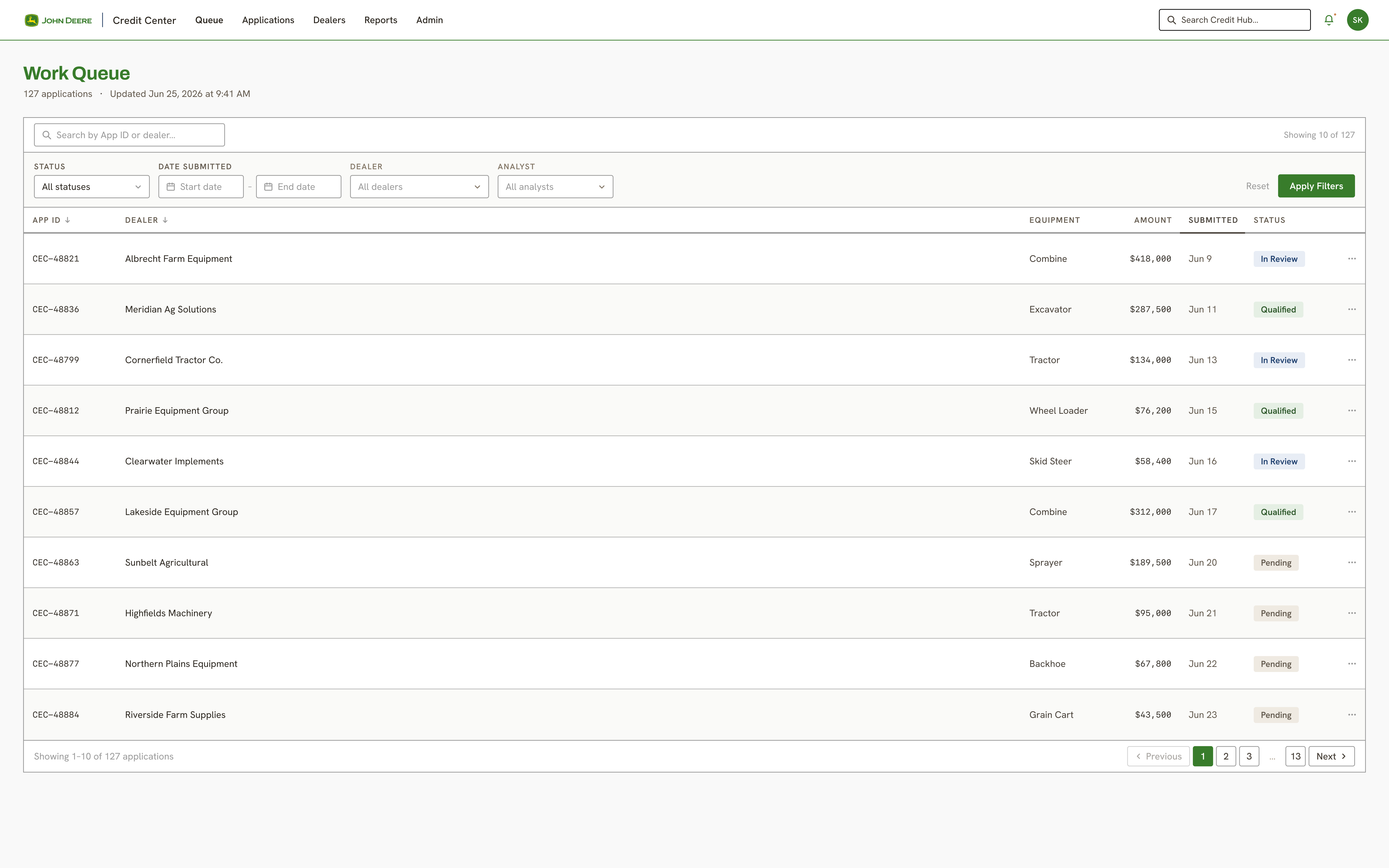
John Deere's credit analysts work inside Credit Hub, reviewing applications and moving each one toward a decision from a shared queue called the Work Queue. Applications that should resolve in hours or days were sitting untouched for weeks, sometimes months.
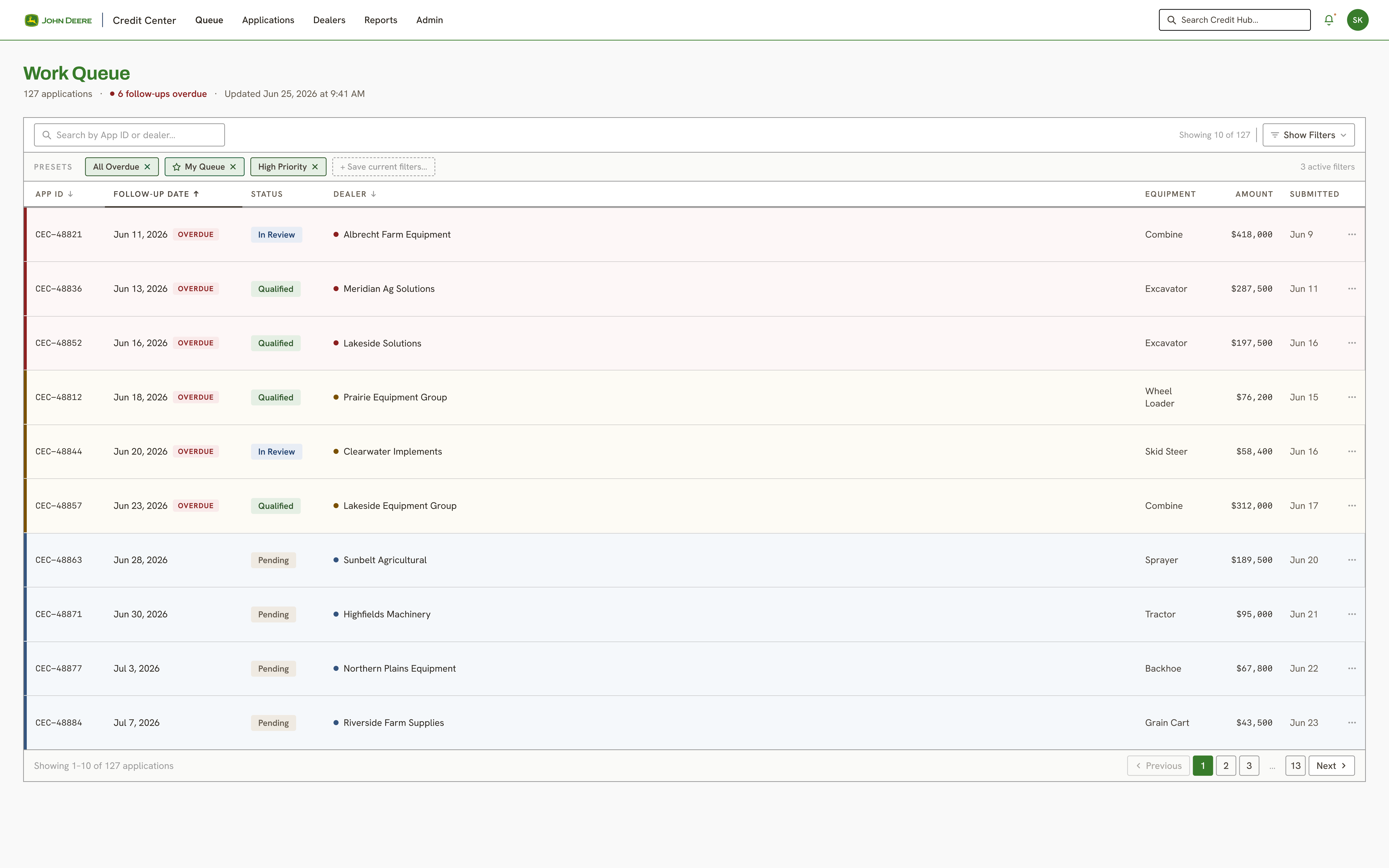
The proposed fix was a Follow-Up Date column, set using an existing application status: Pending. On paper, it was clean and didn't require any massive rework. Before committing, I wanted to understand how analysts actually worked the queue, and whether a Pending-driven follow-up date would fit how analysts moved through Credit Hub. I created some design concepts and put them in front of our users.
Observe
Watched analysts work their actual applications in real time: how they moved through the queue, what they tracked and used within the system.
Probe
Asked directly about the Pending status: did they use it, and in what cases?
Test
Showed new design options and asked for their preference.
Neither analyst used Pending. Neither knew it existed.
One set applications to Qualified instead; the other wasn't sure they could set Pending at all. The mechanism the proposed solution depended on was invisible to the people meant to use it — if the Follow-Up Date could only be set through Pending, the column would ship empty.
Two problems were wearing one solution: analysts needed a visible way to track follow-ups inside the workflow they already used, and the business wanted analysts to adopt a status they didn't know existed. This was a change-management effort, not a layout fix. Once separated, the two weren't mutually exclusive. We could give analysts follow-up tracking, while the business pursued Pending adoption on its own track.
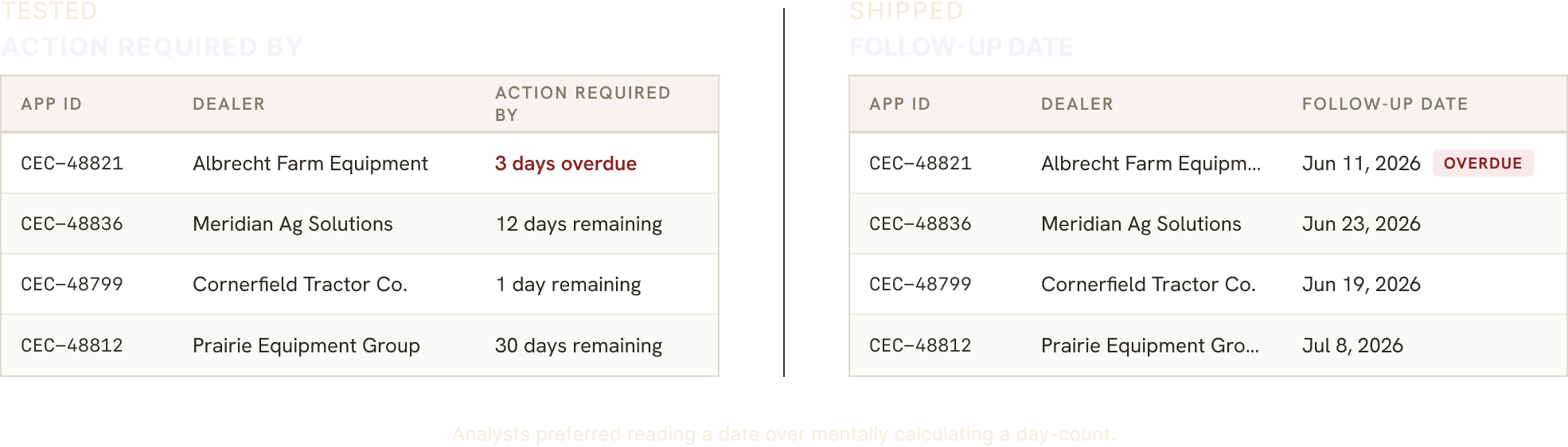
Both analysts independently preferred a plain Follow-Up Date over a day-count. It was easier to glance at and interpret. Beyond the column, they responded to OVERDUE and NEW labels, a queue color-coded by priority, and filters tucked into a drawer instead of crowding the table.